

Fiberglass vs Fiber Cement Planters: Which Is Better for Outdoor Projects?
Most buyers who ask us this already have their shapes picked out. What they are really deciding is which material their customers will still be happy with two summers from now.
We make both in our factory in Ho Chi Minh City, so we have no reason to push one over the other. Here is the rule we give buyers on the first call:
- Choose fiberglass when weight, very large sizes or a painted colour matters most.
- Choose fiber cement when you want a real concrete look and feel at a lower price per piece.
That rule covers most orders. The rest of this guide on fiberglass vs fiber cement planters covers the cases where it doesn’t.
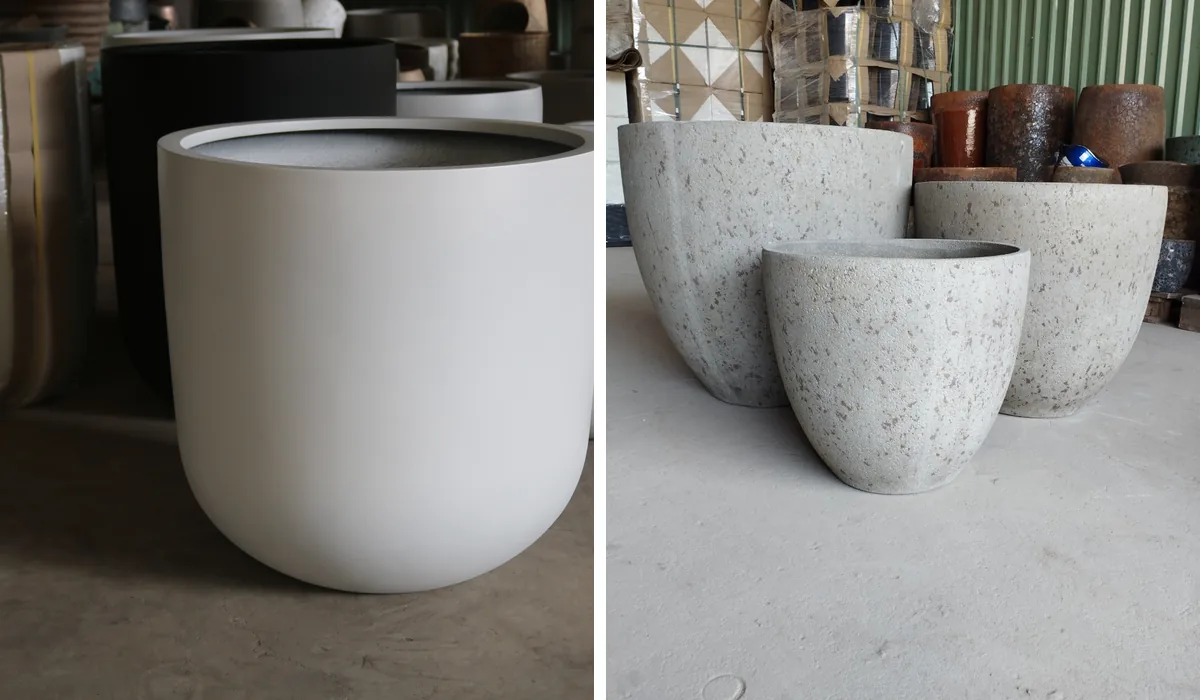
Fiberglass vs fiber cement planters: side-by-side comparison
| Fiberglass (GRP / polyresin) | Fiber cement | |
|---|---|---|
| What it is | Resin reinforced with glass fibre, cast in a mould, then painted | Cement mixed with fibres and fine aggregate, cast in a mould |
| Weight | Light. One or two people can move a large pot | Heavier, though clearly lighter than solid concrete of the same size |
| Walls | Thin | Thicker |
| Surface | Painted: matte, gloss, stone texture, aged effects, custom colours | The material itself shows: greys, washed and weathered tones |
| Size range | Small to very large, including troughs over 2 m | Small to large; the biggest pieces get heavy |
| Wind | Needs soil or ballast to stay put | Stands firm on its own weight |
| Price per piece | Usually higher | Usually lower |
| Weak point | Paint can chip if knocked hard | Can crack if dropped; the surface ages over time |
What each material actually is
Fiberglass planters are made by laying resin and glass fibre into a mould. Once cured, the shell is sanded and sprayed. The colour you see is paint, which is why fiberglass can come in almost any shade. Some markets call the same product GRP (glass-reinforced plastic), polyresin or polystone. The names differ, the material family is the same.
Our fiberglass range runs from small bowls to statement pieces. The HP4045 trough, for example, comes in lengths up to 225 cm, and the HP4001 cube is a six-piece nested set from 70 cm down to 20 cm.
Fiber cement (also sold as lightweight cement or fibre cement) is a cement mix reinforced with fibres. It is cast thinner than ordinary concrete, so it weighs less, but it is still a cement product: it feels cool, solid and slightly rough in the hand. The colour comes from the mix, not from a coat of paint.
We make fiber cement in plain grey and natural tones (HP3001–HP3033), plus two cousins built on the same base: fiber terrazzo, with stone chips in the surface, and bamboo cement.
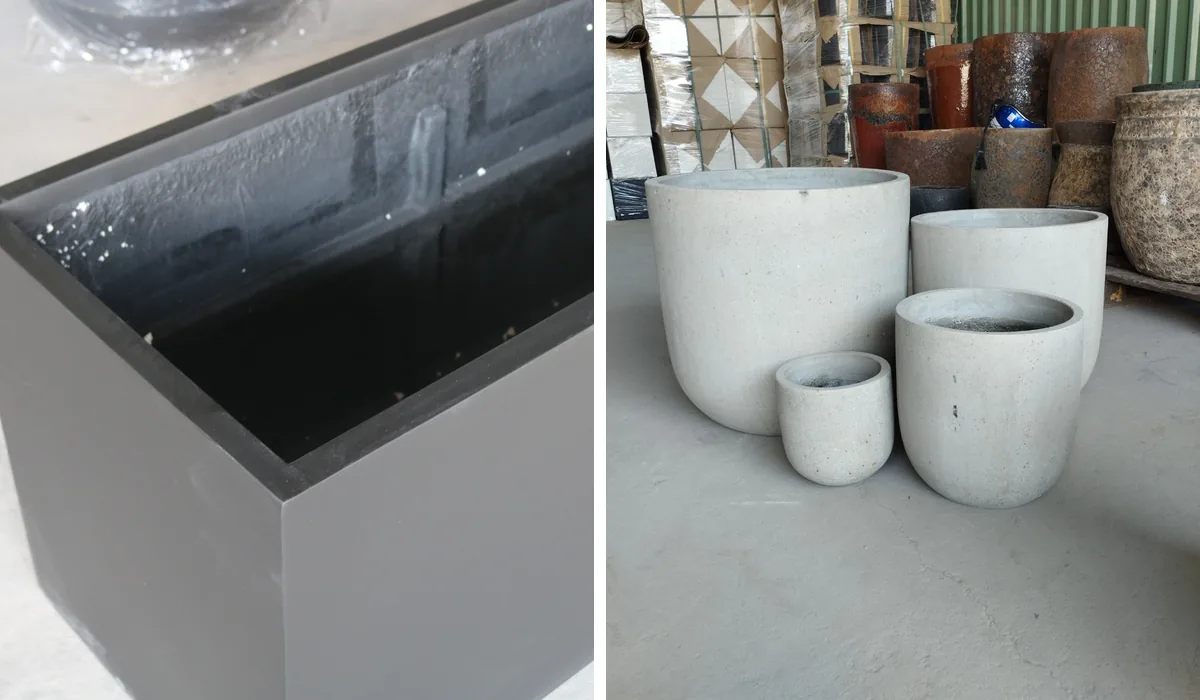
Weight: where it really matters
It is easy to assume that lighter planters mean cheaper shipping. For sea freight that is mostly not true: you pay per container, and nested sets fill a container by volume long before they hit its weight limit.
Weight matters after the container is opened:
- in your warehouse, when staff move pallets and pick orders;
- on rooftops and balconies, where the load limit decides what you can install;
- in a garden centre, when a customer has to lift the pot into a car.
To give a sense of the gap: our HP4007 fiberglass planter, about 60 × 60 cm, weighs about 8 kg empty. A fiber cement pot of similar size, HP1010, weighs about 35 kg. That is more than four times the weight for the same footprint.
The flip side: a light pot with a tall plant can tip over in strong wind. For exposed sites we recommend fiberglass only when it will be filled with soil, or with a ballast layer at the bottom.
Look and finish
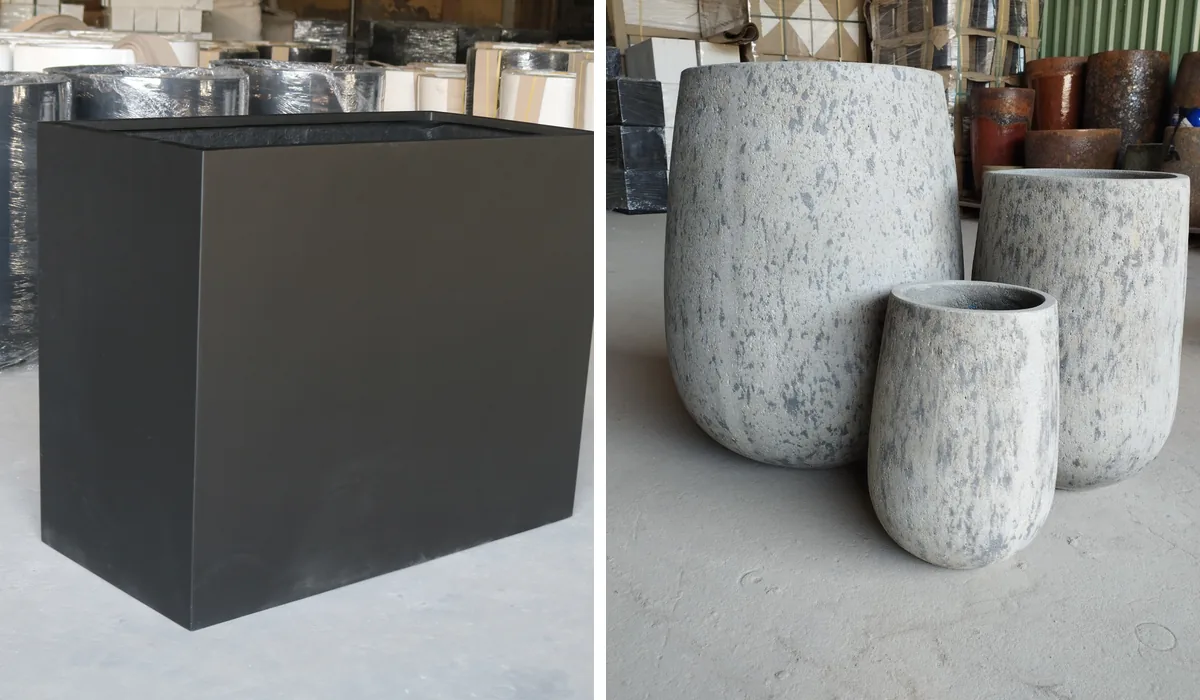
If your customers buy by colour, fiberglass wins. We spray matte black and white, stone textures, aged “ancient” effects and relief patterns such as leaf and fluted designs, and we match custom colours for OEM orders.
If your customers buy by texture, fiber cement wins. It looks like what it is. Over time the surface softens and picks up a natural patina, which many landscape designers actually prefer.
One thing to tell your own customers: small shade differences between batches are normal for any cement product. It is part of the material, not a defect.
How they hold up outdoors
Sun
On fiberglass, the paint takes the sun. We use a UV-resistant coating on outdoor fiberglass, but a dark gloss colour in full sun will still age faster than a matte or textured one. On fiber cement there is no paint layer to fade; the colour is in the material, so sun mostly changes the surface texture, slowly.
Rain and standing water
Water sitting in the bottom of a pot causes more problems than rain on the outside. Whatever material you choose, put drainage holes on your spec sheet for outdoor items, and tell end users to raise large pots slightly off the ground.
Frost
No planter is fully frost-proof if the soil inside is soaked and then freezes hard: the ice expands and pushes on the walls. Fiberglass has a little flex and generally copes better. Fiber cement absorbs some water, so drainage matters even more. For cold markets, good drainage, pot feet and a sealer on fiber cement make a real difference.
Knocks and handling
Fiberglass rarely breaks, but a hard knock can chip the paint and show the layer underneath; small chips can be touched up. Fiber cement doesn’t chip in the same way, but a pot that is dropped can crack. Both arrive on pallets with protective packing; most damage we see in the market happens later, during handling at the destination.
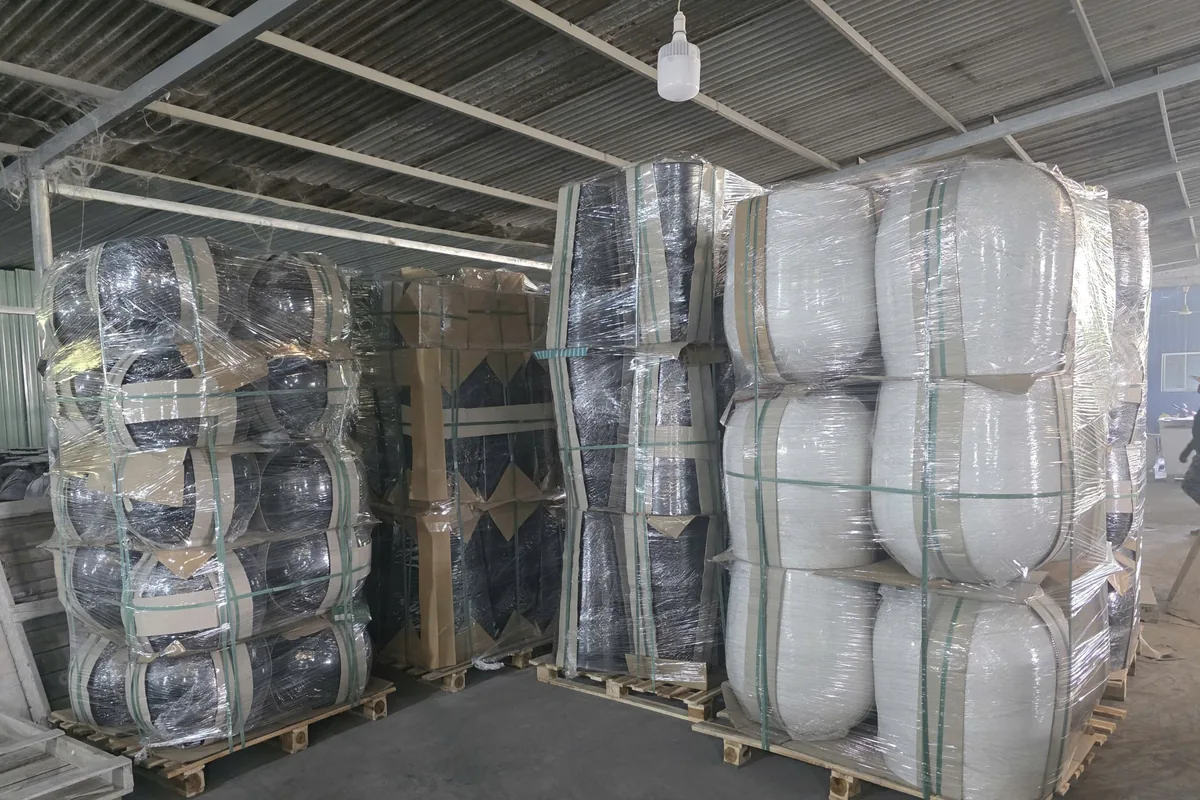
Cost, MOQ and shipping
For the same size and shape, fiber cement is usually the cheaper piece. Fiberglass costs more per unit, but the gap narrows on very large items, where fiber cement gets heavy and harder to handle.
A few practical points for importers:
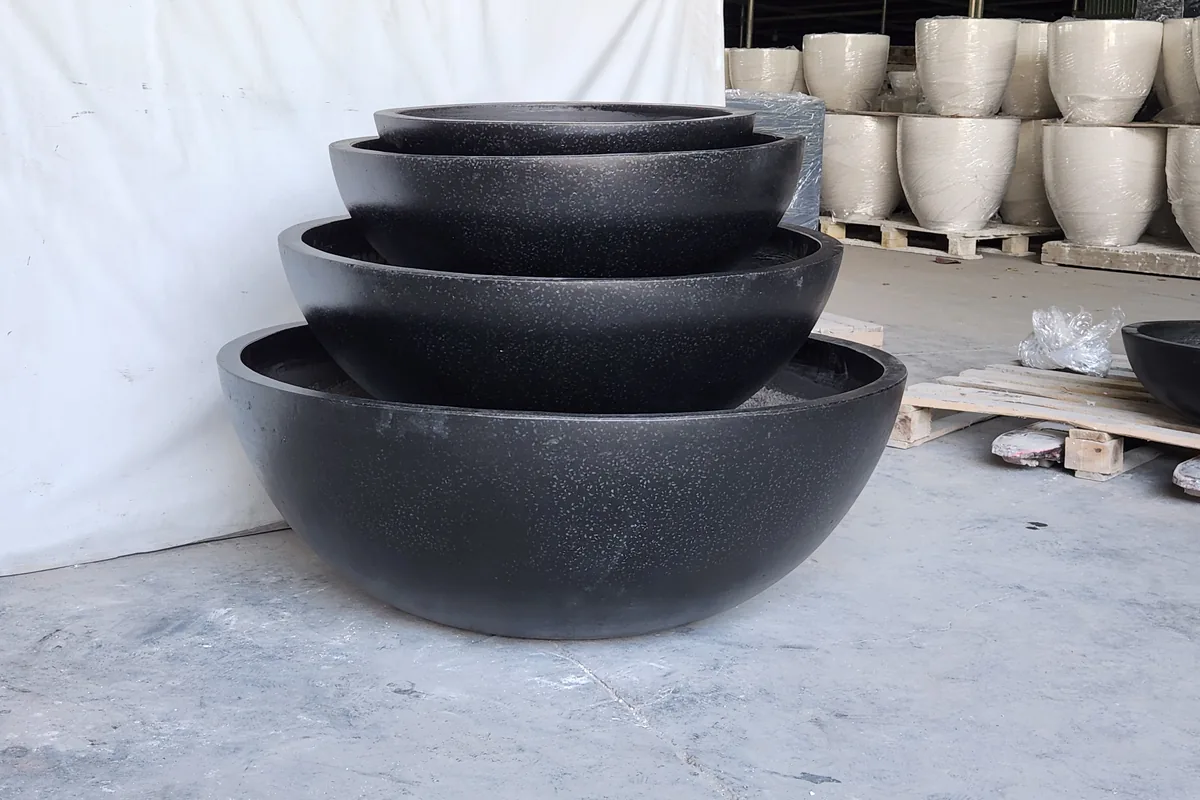
- Nested sets keep freight cost down for both materials. Most of our designs come in sets of two to seven sizes, packed inside each other.
- Packing is listed per design in our catalogue. For example, the HP4022 fiberglass bowl set (seven sizes) packs 16 sets per pallet; the HP3010 fiber cement set (five sizes) packs 12 sets per pallet.
- Container weight: with a container full of large fiber cement pieces, ask your forwarder to check the gross weight early. With fiberglass this is rarely an issue.
- MOQ is one 20ft container, and you can mix fiberglass and fiber cement designs in it.
- Lead time after deposit and sample approval: about 4 weeks for fiberglass in the low season and 5 weeks in the peak season; about 6 weeks for fiber cement. Book early if you need goods in store for spring.
Which one should you buy?
Garden centres and retail chains. Build the core range in fiber cement: good price, natural look, and it doesn’t blow over on the display floor. Add fiberglass for oversized pieces and seasonal colours, and for customers who need to carry the pot home.
Landscape contractors, hotels and resorts. Use fiberglass for very large planters, rooftops, terraces and anywhere with a load limit. Use fiber cement at ground level, especially in windy, open areas.
Importers testing a new supplier. Mix both in your first container. Your own sell-through will tell you more than any comparison article.
What about concrete and metal?
Solid concrete gives the most weight and stability, which suits public spaces where pots should not move. It is also the heaviest to ship and install. Fiber cement gives you most of that look at a fraction of the weight.
Metal planters, such as corten steel or powder-coated aluminium, suit sharp modern designs but heat up in direct sun, which can stress roots without an inner liner. We don’t make metal planters, so we leave that comparison to specialists.
How we make both
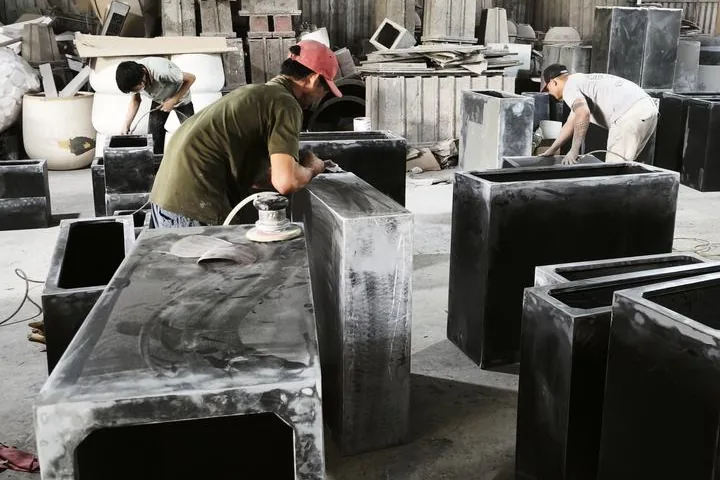
At Hoang Phuong Crafts we have made planters since 2019, today in more than 3,000 m² of production space in Ho Chi Minh City. Fiberglass and fiber cement are cast in our own moulds, hand-sanded, finished and checked batch by batch before they are packed for export.
FAQ
Is fiberglass stronger than fiber cement?
They are strong in different ways. Fiberglass is better at taking knocks without breaking; fiber cement is more rigid and more stable in wind.
Which lasts longer outdoors?
Both last many years with proper drainage. Fiberglass depends on its paint coating; fiber cement depends on not having water freeze inside it.
Are fiberglass planters frost-proof?
They handle frost better than most materials, but no planter is fully frost-proof if soaked soil freezes inside it. Drainage is the key.
Can I mix fiberglass and fiber cement in one container?
Yes. Our MOQ is one 20ft container, and mixed materials and designs are welcome.
What is the difference between fiberglass, GRP and polystone planters?
They are names for the same material family: resin reinforced with glass fibre. Different markets simply use different names.
Get the catalogue
If you are still weighing fiberglass vs fiber cement planters for next season’s range, send us your market, the sizes you sell most and your target quantities. We’ll reply with the 2026 catalogue, FOB prices and a suggested container mix. Request a quote →